Bubble Wrap: The Fascinating Journey, From Invention to Business Essential.

Bubble Wrap: The Fascinating Journey, From Invention to Business Essential.

What is Bubble Wrap? Understanding the Basics

Bubble wrap is a protective packaging material made from plastic, characterized by its air-filled bubbles that provide cushioning and shock absorption for various products. It is widely used in shipping, moving, and storage to protect fragile items from impact and damage. The bubbles can vary in size and thickness, depending on the specific application and level of protection required.

The History of Bubble Wrap

1. Invention and Early Development

Bubble wrap was invented in 1957 by Alfred W. Fielding and Marc Chavannes. Initially, it was created as a textured wallpaper, intended to be a new type of wall covering. However, the inventors quickly realized that the material had far more potential as a protective packaging solution.

2. Commercial Use Begins

In 1960, Fielding and Chavannes founded a company called Sealed Air Corporation. They began marketing bubble wrap as a packaging material, capitalizing on its unique properties that made it ideal for protecting delicate items during shipping. The product gained popularity rapidly, especially among businesses looking for effective ways to safeguard their products.

3. Evolution of Bubble Wrap

Over the years, bubble wrap has evolved significantly. Different variations have been developed, including anti-static bubble wrap for electronic components and biodegradable options to meet environmental concerns. Today, bubble wrap is recognized as an essential packaging material across numerous industries, including e-commerce, electronics, and fragile goods manufacturing.

Benefits of Owning a Bubble Making Machine for Your Business

Investing in a bubble-making machine can offer numerous advantages for businesses involved in packaging and shipping. Here are some key benefits:

1. Cost Efficiency

Producing bubble wrap in-house can significantly reduce packaging costs over time. Buying bubble wrap in bulk can be expensive, especially for businesses that require large quantities. By making your own bubble wrap, you can lower overall expenses associated with purchasing packaged materials from suppliers.

2. Customization

A bubble-making machine allows businesses to create custom-sized bubble wrap tailored to specific products. This level of customization ensures that items are protected precisely according to their dimensions, reducing waste and enhancing overall packing efficiency.

3. Quality Control

Owning a bubble-making machine gives you complete control over the quality of the bubble wrap produced. You can ensure that the material meets your business standards in terms of thickness, size, and durability. This control is vital for maintaining the quality of packaged products and minimizing the risk of damage during transit.

4. Increased Production Speed

With a bubble-making machine, businesses can produce large quantities of bubble wrap quickly. This efficiency can lead to faster packing times and improved overall productivity. When items are packed efficiently, businesses can fulfill orders more rapidly, leading to enhanced customer satisfaction.

5. Flexibility in Material Use

Bubble-making machines often allow users to choose different types of plastic materials for production, such as recycled or eco-friendly options. This flexibility enables businesses to align their packaging practices with sustainability goals while still providing effective protection for their products.

6. Reduced Storage Requirements

Producing bubble wrap on-demand means you do not need to maintain large inventories of pre-made bubble wrap rolls. This reduction in storage requirements can lead to more efficient use of warehouse space and lower overhead costs associated with storing excess packaging materials.

7. Enhanced Branding Opportunities

By producing your own bubble wrap, you can incorporate branding elements into the packaging material itself. Custom-printed bubble wrap can serve as a marketing tool while providing protection for your products. This added visibility can enhance brand recognition and contribute to a positive customer experience.

8. Environmental Considerations

With growing concerns about plastic waste, many businesses are looking for ways to be more environmentally friendly. By producing biodegradable or recyclable bubble wrap in-house, businesses can take steps toward reducing their environmental impact while maintaining effective packaging solutions.

9. Improving Customer Experience

The protective qualities of bubble wrap are essential in ensuring that products arrive at their destination in pristine condition. By owning a bubble-making machine and producing high-quality bubble wrap, businesses can enhance their customer experience by reducing product damage and returns.

Conclusion

Bubble wrap has become an integral part of packaging solutions worldwide since its invention in 1957. Understanding its history helps appreciate its role in modern shipping and logistics. For businesses involved in packaging and shipping fragile items, investing in a bubble-making machine presents numerous benefits—from cost savings to customization options and improved quality control.

As e-commerce continues to thrive and the demand for safe packaging grows, owning a bubble-making machine could position businesses favorably in a competitive landscape. The ability to produce high-quality bubble wrap tailored to specific needs not only streamlines operations but also contributes to customer satisfaction and environmental responsibility.

For more information on packaging solutions, including bubble-making machines, Contact Us!

The Difference In Plastic Bags Used In Packaging And Industrial Use

The Difference In Plastic Bags Used In Packaging And Industrial Use

The Difference In Plastic Bags Used In Packaging And Industrial Use

Plastic is a very versatile material. By slightly modifying its chemical composition, its properties can be changed significantly. And we see the example first hand in the different plastic products that we use on a daily basis.

Consider the plastic bag. They are available in different specifications and sizes. However, the classification can be divided into two – Consumer packaging and Industrial packaging.

Industrial plastic bags are much different than what we get from the grocery store. The plastic bags that we use to carry stuff from stores to our homes are lightweight and thin products that can carry a certain amount of load. However, they are not suitable for carrying heavy loads.

Industrial packaging plastic bags can carry significantly higher load than ordinary plastic bags. But this is just one use case. The types of plastic bags used in industry changes based on the requirements.

Let us discuss some of the most common differences in plastic bags used in normal use and industrial use.

Strength – Load Carrying capacity

One of the key areas where plastic bags in industrial use must prove their mettle is in strength. The plastic must be able to hold a sizable amount of weight without breaking.

This is where the density of the plastic comes into effect. High-Density Polyethylene or HDPE is the strongest among plastic bags due to its high density. high-density plastics can hold heavy loads but can tear from sharp objects.

Linear Low-density plastic or LLDPE is very flexible thanks to the molecules being places apart and can withstand tearing or puncturing to a large degree. This makes them the prime choice for carrying sharp objects. They are not as strong as HDPE.

LDPE or Low-Density Polyethylene is the least dense of all plastic. It is not used to carry heavy loads and is not as flexible as LLDPE.

So when strength is the only concern, the choice is high-density plastics. HDPE or High-Density Polyethylene is a high-density plastic that can carry a load much more effectively the LDPE or Low-Density Polythene.

Due to the high density of HDPE (0.93 to 0.97 g/cm³), it is more rigid when compared with low-density plastics. HDPE is used in industries like food, beverage, pharmaceuticals, and consumer goods.

Chemical resistance

Chemical resistance of plastic bags is critical in industries where load that they are carrying is chemically corrosive. Plastic is generally chemically resistant. However, as the reactivity of the chemical increases, it can damage even plastics.

Hence, HDPE is still the most favored choice for packaging chemically corrosive substances. Industries use HDPE packaging more often than the alternatives.

LPDE plastic bags can get damaged when they are in direct contact with powerful corrosives. However, they are still useful against low to mildly corrosive chemicals, making them suitable for ordinary use.

FDA approval

FDA or Food Drug Administration is the Federal Agency of the US that regulates rules and regulations pertaining to consumables. Since plastic bags are one among the most common type of food and drug packaging material, the FDA has clear guidelines on what to use and what not to use.

Food items in the US can only be packed with FDA approved plastics. Using any other form of plastic is illegal and may lead to adverse events like food poising, consequently a criminal case. Let us review some of the FDA approved plastics that are available for packaging.

HDPE High-Density Polyethylene

Like we discussed before, HDPE or High-Density Polyethylene is one among the prime choices for packaging food because of its chemical stability. The plastic does not absorb much moisture nor does the plastic mix with the food.

It is safe and has excellent heat resistant qualities.

LDPE or Low-Density Polyethylene

LDPE is also approved by the FDA as plastic granted that It is not made from 100% PCR LDPE resin. Food grade LDPE plastic bags are used to pack food or for transportation purposes. It is the more popular option thanks to the low cost of manufacture.


Polypropylene

Polypropylene is a very lightweight plastic thanks to its very low density, hence they are ideal for packaging. The inert characteristics of the polypropylene bags have gained them FDA approval to be used for packaging food and drugs.

Clarity or Transparency

You might have noticed that some plastic bags are very transparent, while some are opaque or translucent. Even though dyes can be added to give the plastic color or visual enhancements, the clarity of the plastic mainly depends on its density.

HDPE: High-Density Polyethylene have the polymers closely packed together, this makes the bag opaque. HDPE garbage bags are a prime example where they are either in black or blue showing no signs of transparency.

LDPE: Due to the low density of this plastic, the bags made out of them are either transparent or has mild cloudiness to them. They are often dyed to get a tint. In essence, LDPE has the highest clarity or transparency among packaging plastics.

MDPE: Medium Density Polyethylene bags stay between HDPE and LDPE when it comes to density. And you can see that its properties are a mix of the two extremes. Clarity of MDPE can be defined as partially cloudy or translucent.

Gauge size

Another important difference between plastic bags for general use and industrial use is the gauge size. Basically, gauge size is the thickness of the plastic bag. The higher the thickness, the stronger it becomes.

Generally, plastic bags range from 100 gauges or 25 microns to 500 gauge or 125 microns. 1 micron is equal to 0.001mm.

For industrial purposes, higher gauge plastic bags are used because of their superior strength and heat resistant properties. A 500 gauge plastic bag can hold up to 40Kgs without failing.

For general use or consumer use, lower micron alternatives are used. However, plastic bags less than 50 microns have been banned in many countries due to their non-recyclable nature.

Conclusion

The plastic bags used for general use and industrial use are different because their requirements are different. Plastic bags in industrial packaging are made to withstand harsher use cases when compared with normal consumer-grade plastic.

And knowing the difference between the two helps you to make the right purchase decision for your packaging needs. Need more helping on choosing the right packaging? Contact BorderPak and have all your packaging questions answered today.

Sealed Air – HOW TO COMPETE AGAINST BIG E-COMMERCE RETAILERS ALL YEAR LONG

Ken Chrisman

It’s been seven years since American Express introduced Small Business Saturday – a day to eschew Black Friday doorbuster deals and online discounts in favor of doing holiday shopping in-person at local businesses.

Consumers have responded positively to the shop local notion, with 112 million folks spending more than $15 billion during last year’s Small Business Saturday, according to American Express.

Every small business owner wants their piece of those billions, so it’s no surprise that a cottage industry of advice blogs, marketing tips, and B2B services are swooping in to help these businesses make the most of this special shopping event by offering customer events, VIP perks, social media promotion, email reminders, open houses, and more.

E-commerce solutions for small businesses

But what happens when the clock strikes midnight and Small Business Saturday becomes just another Sunday and consumer buying behaviors revert to business as usual? What do you do when the shopper who was thrilled to browse charming in-store displays goes back to toggling between online browser windows searching for the best price and fastest shipping options?

Somehow, independent businesses need to figure out how to attract a crowd on November 25 for Small Business Saturday, but more importantly, they’ve got to keep those customers coming in the door the other 364 days of the year, and that means getting smarter at competing in the e-commerce marketplace.

Going up against mega online retailers can be a daunting prospect for brick-and-mortar shops that can’t easily slash prices or eat the cost of free shipping, but being a little fish in the giant sea of online shopping can actually be a competitive advantage.

Here’s how.

Protect Your Most Valuable Assets

Small business owners are passionate about two things: their customers and their products. While bigger retailers play the game of large numbers – bringing in new customers and product SKUs and writing off others – small business owners are more committed to winning and keeping every customer they can get.

Half of all U.S. e-commerce customers have had a poor delivery experience from an online order and 70% percent of those say they’ll consider taking their business elsewhere the next time they shop, according to Sealed Air’s national survey.

For billion dollar corporations, maybe that can be considered the “cost of doing business” and they feel they can afford to lose a few unsatisfied customers in favor of volume or speed. But for small businesses, that tradeoff is unacceptable.

Meeting delivery expectations, ensuring that every item shipped is protected against theft and damage, and making it easy for customers to open, recycle, reuse, or dispose of the packaging in which the order is delivered – these might seem like common sense practices, but packaging is the last moment of truth for a retailer’s brand and these small changes can mean the difference between retaining customers or losing them forever.

Personalize the Delivery Experience

Big retailers struggle to make every e-commerce order feel personal. Little in-the-box touches such as gift wrapping, personalized messages, or samples entice return customers. These touches are known in the fulfillment business as “non-standards,” which means they require more laborious (aka more expensive and less efficient) processes, and many large-volume e-commerce operations opt not to do them (or don’t do them well).

But increasingly, this kind of customized attention is exactly what consumers expect. Luckily for small business owners, a commitment to personal touches is often a part of their DNA.

Bringing this philosophy into the world of e-commerce fulfillment is a way to instantly stand out from the crowd, and keep consumers coming back to shop online with you again – even if they have to pay a little bit more to do it.

Maximize the Efficiency of Every Inch and Every Hour with E-Commerce Solutions

Small businesses are called that for a reason – they tend to be small-footprint operations that don’t employ many people. That means that every square foot and every minute of paid labor are very valuable resources, and smart small business owners have learned to maximize these resources with exceptional attention and ingenuity.

Big e-commerce operations are dealing with these issues on a mega scale – labor availability and warehouse space are hitting record lows at a time when e-commerce shopping is on the rise.

Finding faster, smaller ways to get the same job done by fewer people has become a major challenge that Sealed Air has been helping large-scale businesses solve, and we’re encouraging these big companies to take cues from small businesses:

  • Invest in semi-automated e-commerce solutions such as inflatable air pillows that take up less space and free up room to add new products that will grow the business.

  • Redeploy workers to activities that will drive more value and make the low-value activities (such as assembling boxes or gift wrapping items by hand) faster and simpler.

  • Use one-step packaging material such as shipping mailers that can reduce shipping costs and eliminate packing peanuts, paper, and other bulky, time-consuming materials.

Avoid the Growth Spiral

Sealed Air works with lots of e-commerce retailers that have grown faster than expected. While that kind of explosive growth can be exciting, it can also create waste at an exponential rate.

Getting more orders out the door usually adds up to spending more on each box. Leaving too much empty space inside the box, using too much filler, and continuing inefficient labor practices are the kind of costly mistakes that many retailers face when online operations start to take off.

Getting control of those challenges early on, and scaling your operation at a speed that is profitable for you, but doesn’t sacrifice package protection or personal touches, is just one more way that small businesses can beat big businesses at their own game any day of the year.

For more on how the at-home delivery expectations of e-commerce customers are changing the game for retailers of all sizes, visit Sealed Air’s Expand Your Brand resource hub.

READ MORE

Packaging Automation Saves Money

Packaging Automation Saves Money

packaging automation systems

How Packaging Automation Saves Money

Package automation is something you need in your business. You know that it will save you time, but did you also know it will save you money? It doesn’t matter how big or small your business is. By getting an Autobag or investing in packaging machines, you will find your profits widen and you have more money to spend in other areas of your business.

Not sure that’s the truth? Here’s a look at packaging automation and how it will help save you money.

Reduce Employee Cost By Hiring Less People

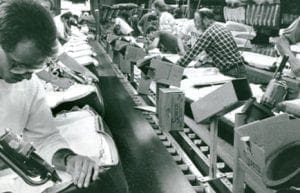
You want to keep your employment costs down in your business. To get through a large order in a short amount of time, you would usually need to hire many people. Humans are slow, and some are slower than others. If their productivity levels slip, they have to work longer hours to get the task done.

Chances are you’re paying them by the hour. For simple maths, let’s say the hourly rate is $10. It can take 10 people 10 hours to do the packing. That’s $100 per hour spent on your employees, and $1,000 spent over the course of the day.

When you invest in packaging machines, they can handle the packing efficiently. They don’t lose track of time, find their productivity levels slip, or struggle with motivation for the day. They also won’t look at ways to play the system to get more hours to get paid more.

Autobag Automated Packaging Systems Are More Accurate

People forget what they’ve put into boxes and bags. This is especially a problem for larger orders. Your customers can lose out on items that have been promised, meaning you have to deal with it quickly and effectively. Sometimes just getting the missing item isn’t enough.

After that, you need to find out why this happened. It can involve disciplining your staff or extra training. This requires more money spent by you to afford this extra training. Machines don’t need extra training. They’re more accurate. Investing in an Autobag automated packaging system could reduce the chances of missing items immediately.  There will still be employees needed. You’ll need someone to repair the machines and someone to overlook the process in case there’s a problem, but you don’t need all the packers.

Machines Use Minimal Products

You get to program just how many of an item is put in a box or bag. You control the amount of tape that is used. Everything is uniform and done in a cost-effective way. This isn’t possible with humans.

There will be packing standards to follow, but not everyone is able to visualize a certain number of meters of tape. They may get the placement slightly wrong, leaving your boxes and packets looking a little unprofessional. They also spend more time getting measurements right and you run the risk of more materials needing bought to replace tape and boxes quicker.

Investing in an Autobag automated packaging system will help to prevent this. You’ll know the exact amount of boxes the machine can pack. You’ll know just how many bags the automated packaging system needs for an order.

It’s time to invest in packaging automation systems. Sure there is an initial investment, but that is made up potentially within weeks, especially for larger businesses. You will save money in the long term which will provide a high return on your investment, allowing you to put more into your business.

Packaging Automation Saves Money

Recommened Article: System Advantage to total system bagging

Automated Packaging Systems Next Generation Autobag Baggers

Automated Packaging Systems Next Generation Autobag Baggers

Automated Packaging Systems Next Generation Autobag Baggers

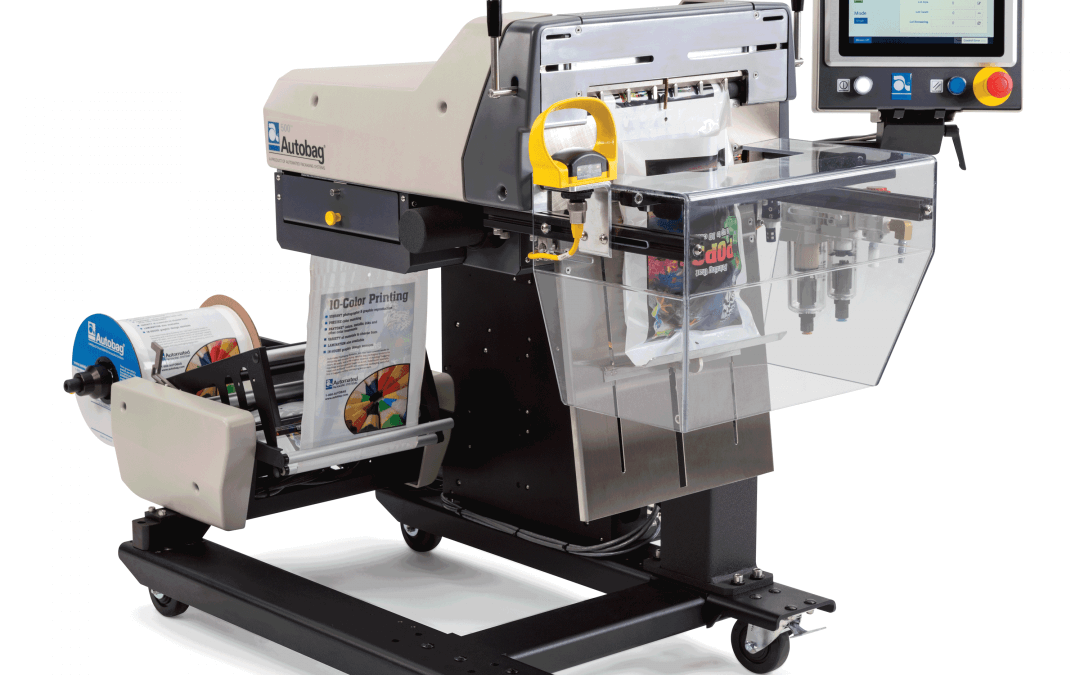
Introducing the Autobag 500 Bagging System – The new flagship in bag packaging machinery optimizes reliability, flexibility and ergonomics – Autobag® 500™ Bagging System
The Autobag 500 will package at rates over 100 bags per minute using genuine Autobag pre-opened bags-on-a-roll in sizes from 2 inches to 12 inches wide by 2.5 inches to 20 inches long. The Autobag 550 utilizes the same basic design, with a fully integrated AutoLabel™ imprinter positioned directly over the next bag to be loaded, eliminating the need for a separate print and label operation.

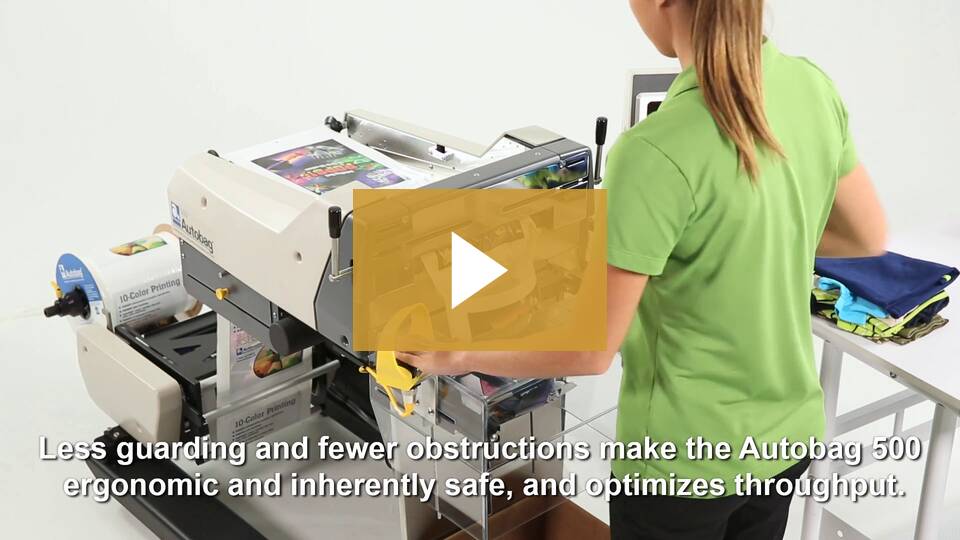
An innovative design provides more efficient loading with an adjustable pass-through opening up to five inches wide. No light curtains and less guarding enable unrestricted access to the pre-opened bag while remaining inherently safe. These new Autobag bag packaging systems can be configured in left- or right-hand orientation with an easy height adjustment for maximum operator productivity and comfort. An improved, multi-position unwind with tension control provides faster changeovers of bag-on-a-roll materials with an AutoThread™ function that reduces waste.

“Development of the Autobag 500 and 550 was guided by what our customers told us they wanted most in a next-generation packaging solution. The result is a bagger platform that delivers improved value to everyone from the financial decision maker justifying the initial purchase all the way through to the operator that runs the machine on a daily basis,” says Chris Rempe, Global Marketing Director. “These new systems facilitate a faster Return on Investment and lower cost of ownership while offering enhanced connectivity and integration flexibility. Special attention was given to the industrial design to improve safety and ergonomics for the operator and ensure the external appearance of the machines complement the advanced technology found inside. We believe that making our customers more successful is the best way to ensure our own, and these new baggers represent our latest product innovation dedicated to the pursuit of that idea,” he adds.

Read More…

Automated Packaging Systems Next Generation Autobag Baggers

Read another great article on Autobag’s cost effectiveness

AutoBag Packaging Equipment

Save